Department of Geography, 116 Geography Building
Michigan State University
East Lansing, MI 48824-1117
Quaternary Landscapes Research Group
an informal assemblage of geographers and our colleagues
working on research questions related to Quaternary landscapes in
the Great Lakes region, USA
Our home is the
Department of Geography at
Michigan State University
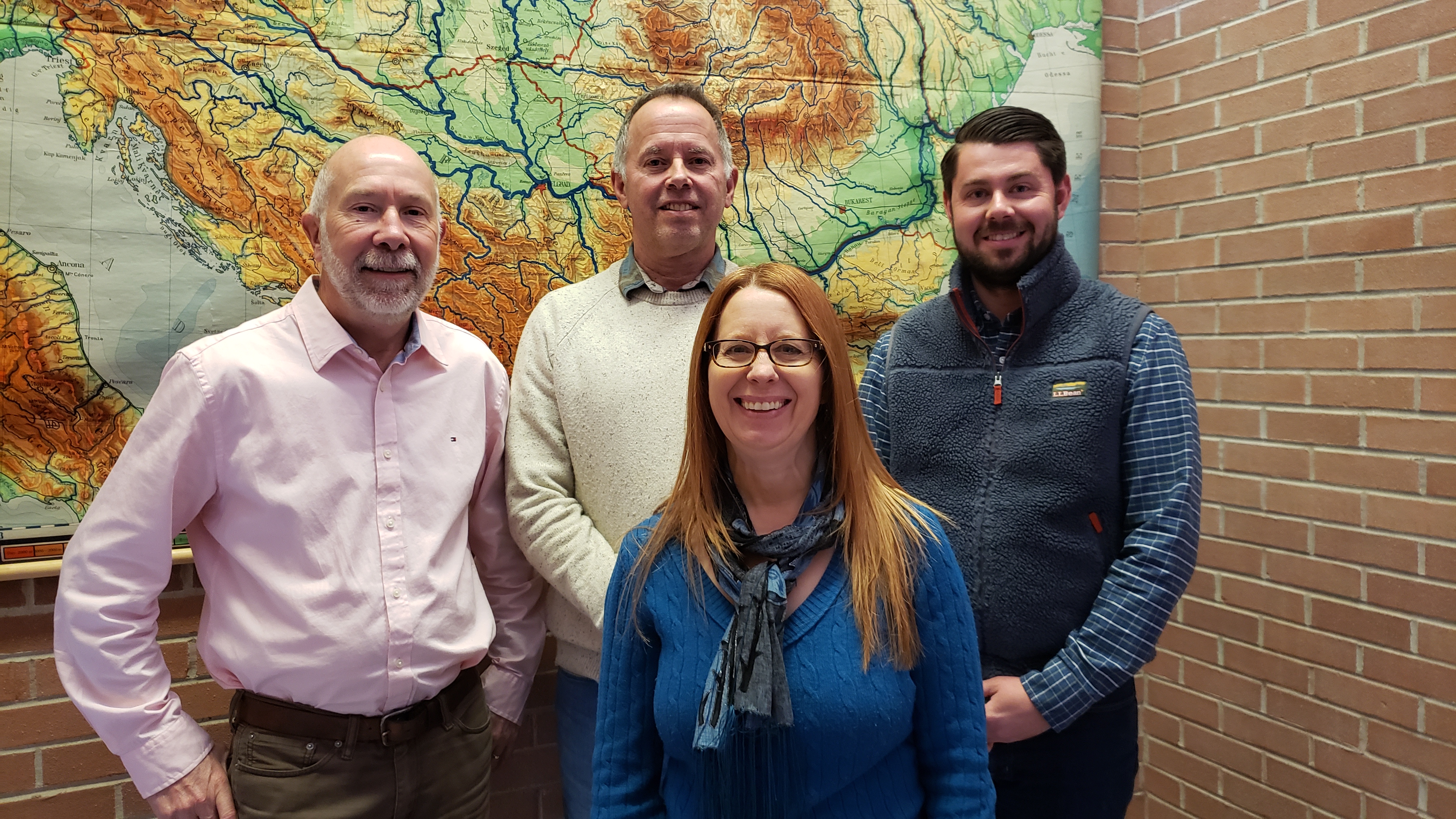
The QLRG Geography core faculty
From left: Randy Schaetzl, Alan Arbogast, Catherine Yansa, Ethan Theuerkauf
Quick link to publications
list
What we are all
about
The Quaternary Landscapes Research Group (QLRG) is an informal cluster
of like-minded individuals at Michigan State University who are
actively reconstructing prehistoric landscapes, both the processes
involved in their physical formation as well as their use by humans.
Our research is focused on the Great Lakes region. Our overall
goal is to form and maintain an interdisciplinary network that seeks to
improve our historical understanding of the Great Lakes region.
Although the core of the group is based in the Department of Geography,
individuals from the Departments of Anthropology and Geology are
affiliated, and we work closely and often with them. Quaternary
studies is not the property of Geography on this or any other campus;
at MSU it appears so only because it is the most efficient way of operationalizing
this web page and the QLRG. The purpose of this page is to point
out the various aspects of Quaternary Studies that are based in, and
run out of, Geography at MSU. Many other projects are ongoing across
campus, which we cannot give justice to on this web page. The
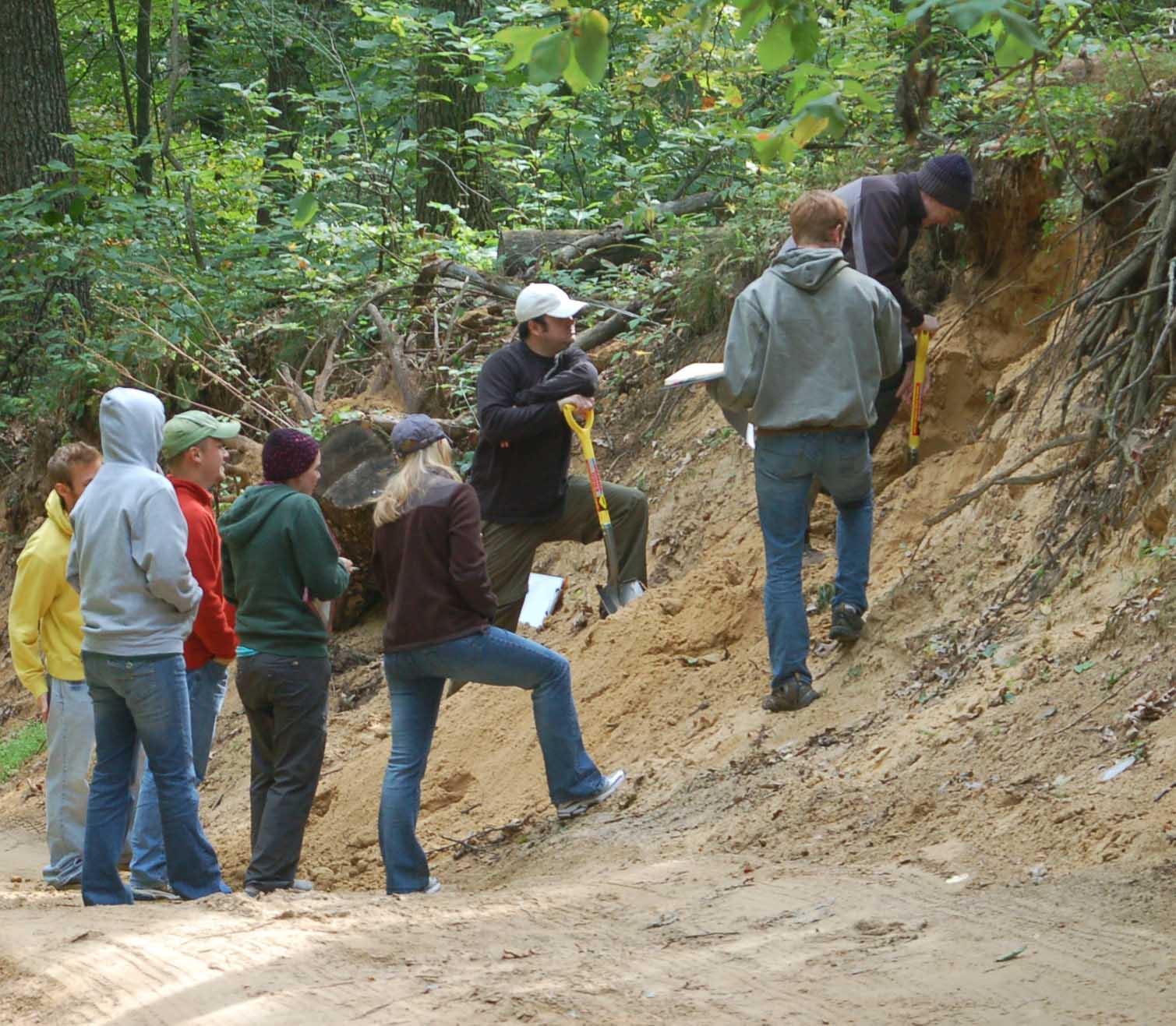
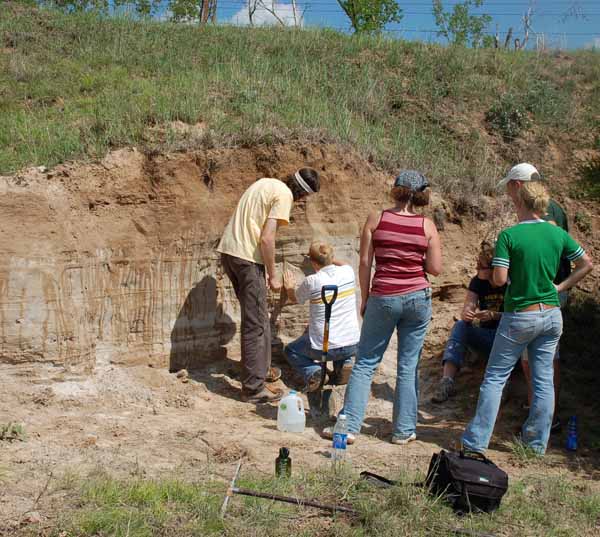
QLRG is a field-oriented group; we value field research and working with
students in both the field and laboratory.
Who we are and
what we our interests are
Core Geography faculty (alphabetical)
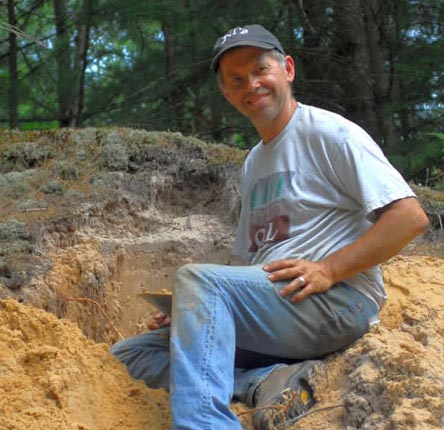 |
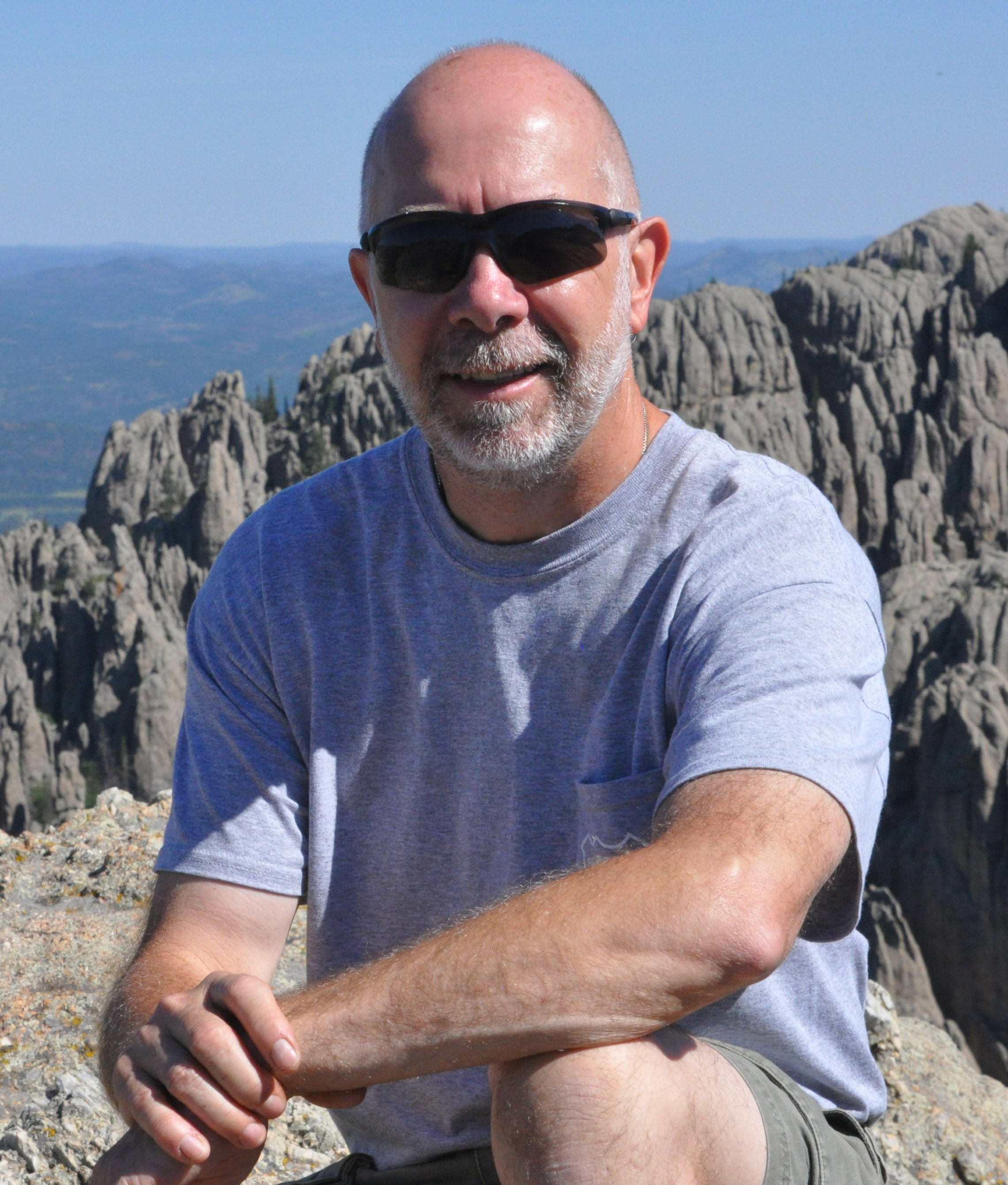 |
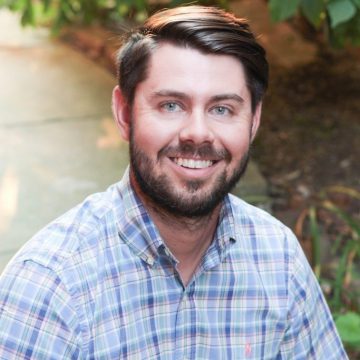 |
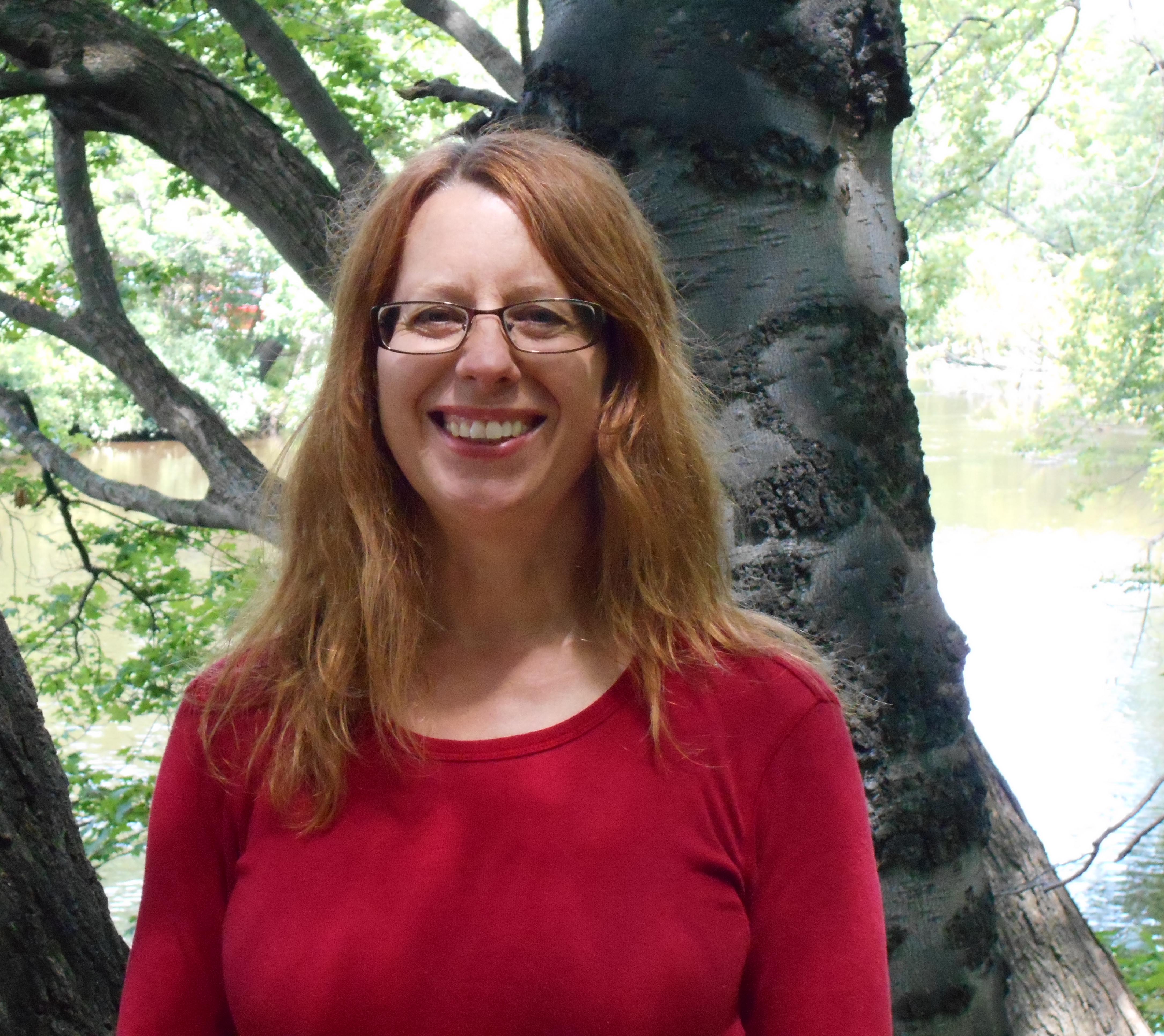 |
Alan Arbogast Eolian geomorphology |
Randy Schaetzl 517-353-7726 |
Ethan Theuerkauf email: theuerk5@msu.edu 517-355-4655 Web page here Coastal geomorphology |
Catherine Yansa 517-353-3910 |
Associated QLRG faculty
We are proud to be associated with the many fine faculty at
MSU, who also teach and conduct research on Quaternary topics.
Jeff
Andresen (Geography)
|
Michael Velbel (Geology)
|
Frederick (Fritz) Nelson (Geography)
|
Kurt Rademaker (Anthropology)
|
|
Dave Lusch (Geography)
|
Jody O'Gorman (Anthropology)
|
Kyla Dahlin (Geography)
|
|
What our current research is focused on
Current research foci reflect the myriad of landscapes and prehistoric
cultural affiliations found in the Great Lakes region, including:
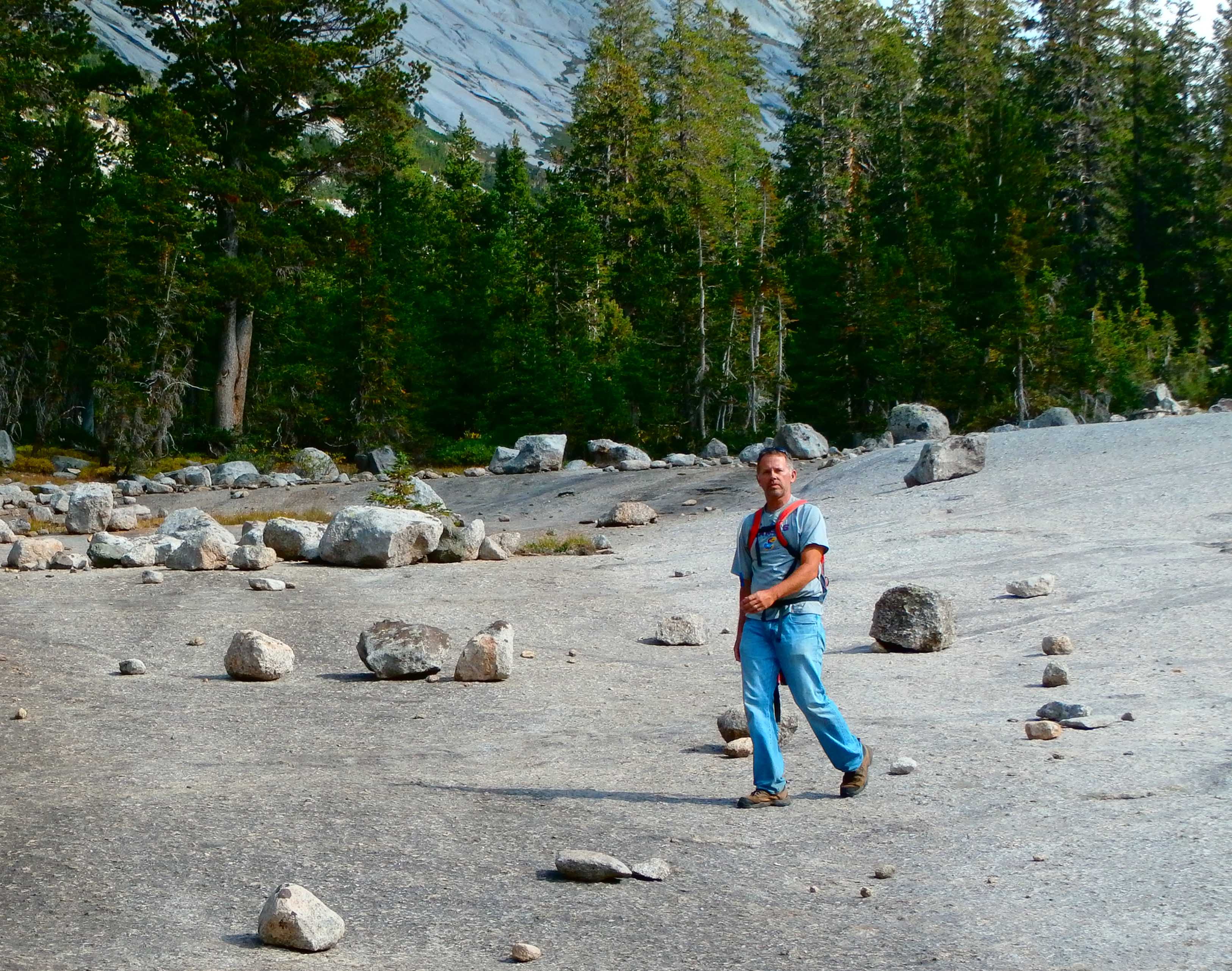
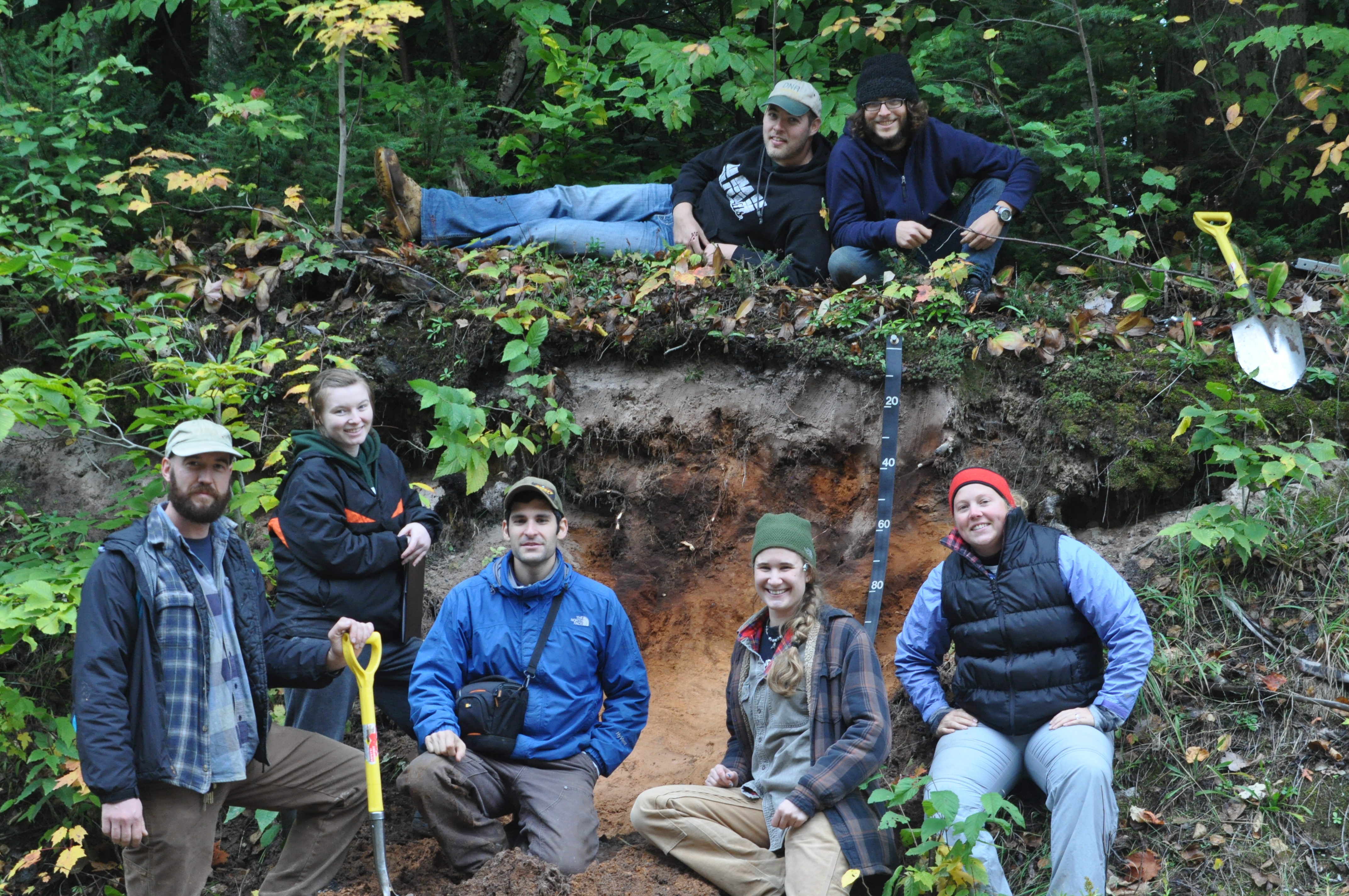
Our work revolves around the Quaternary landscapes of
the Great Lakes region, with an emphasis on Michigan. Because
landscape evolution is complex and multi-faceted, we approach these
problems from a multi-disciplinary angle, and we incorporate GIS in our
research prootocols. Our research strengths
and equipment allow us to approach problems of Quaternary paleolandscape
and paleoenvironmental reconstruction using data derived from soils
(both surface and buried), landforms and plant fossils. Much
of our work involves 14C and OSL dating, as a way of establishing
approriate paleoenvironmental chronologies.
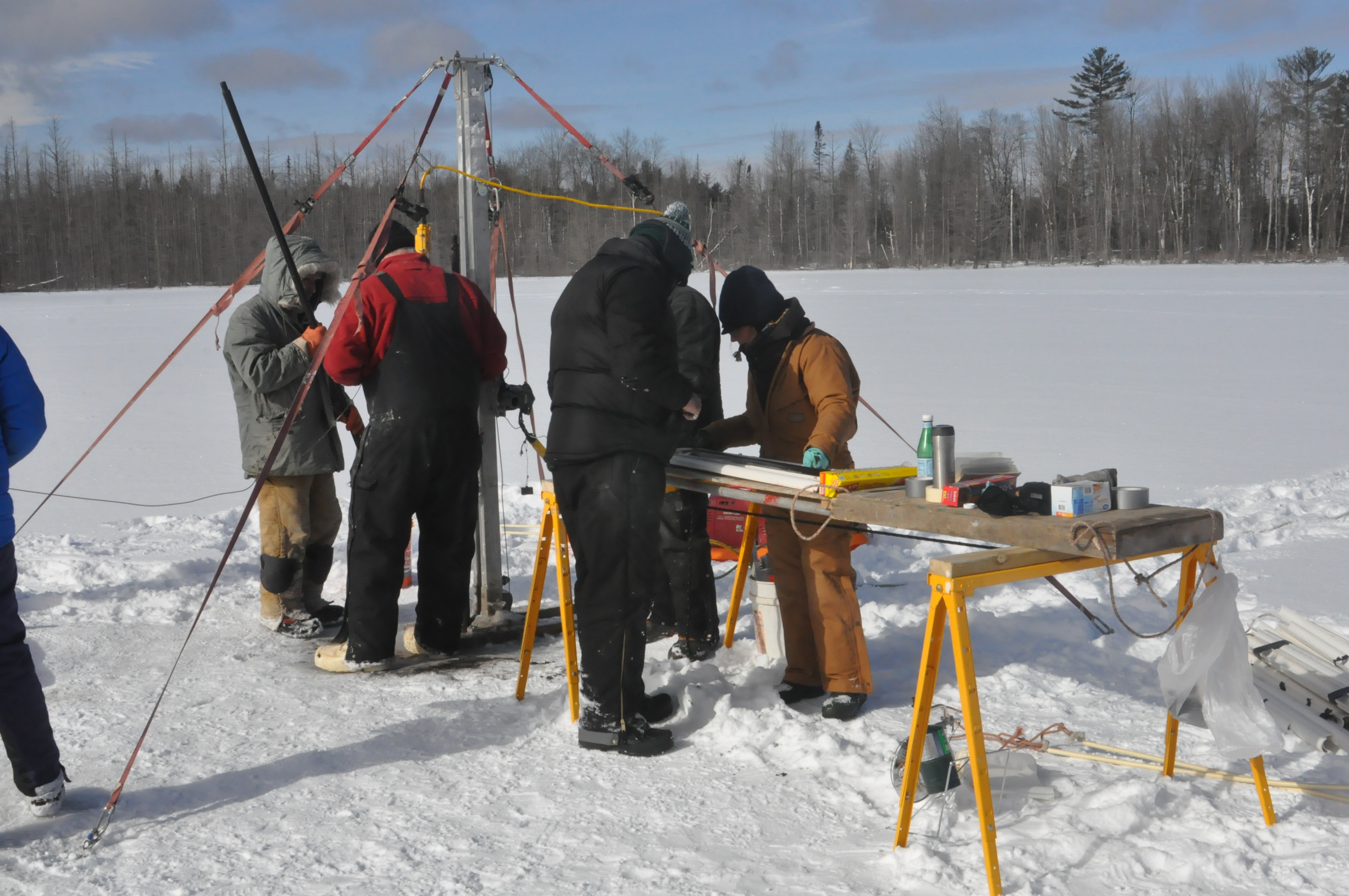
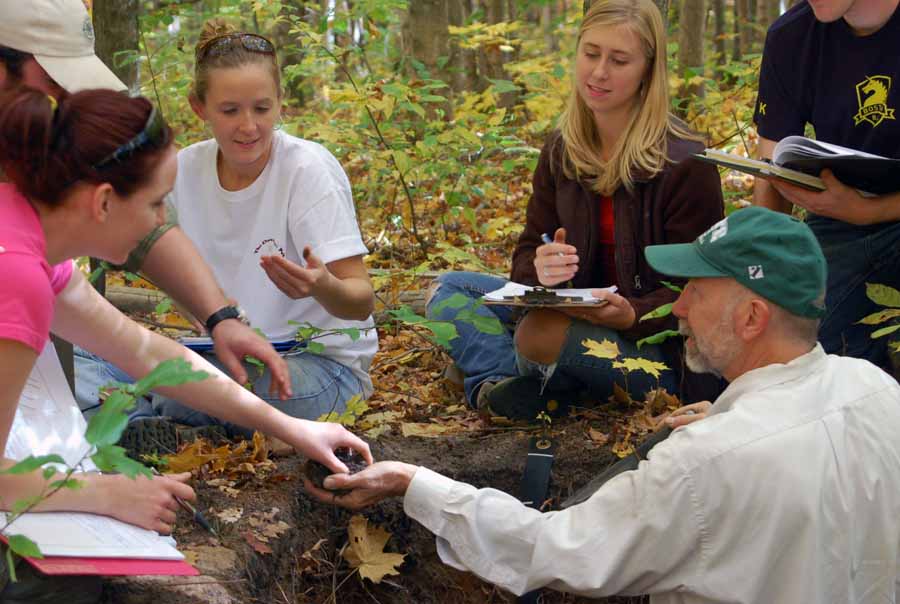
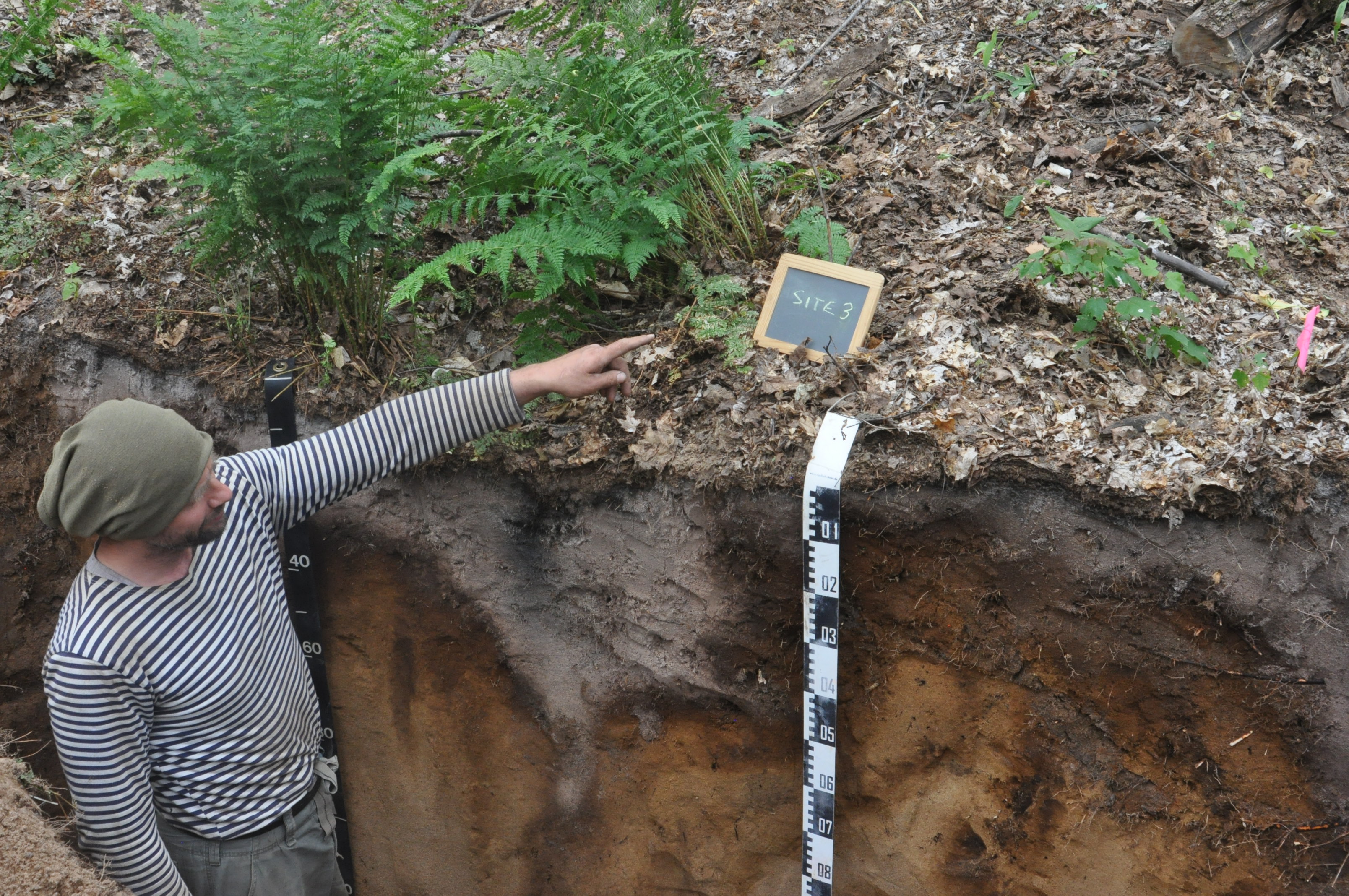
What our current
research areas are like
It's no secret. Many people think Michigan and the Great Lakes
region consist of little more than cloudy, flat, dense forests. NOT
true! We think this landscape is one of the most exciting, complex
and fascinating landscapes to work in. And so little of it has been
studied that much remains to be done. Top it of with the fact that
much of this landscape is public land (State or National Forest, etc.)
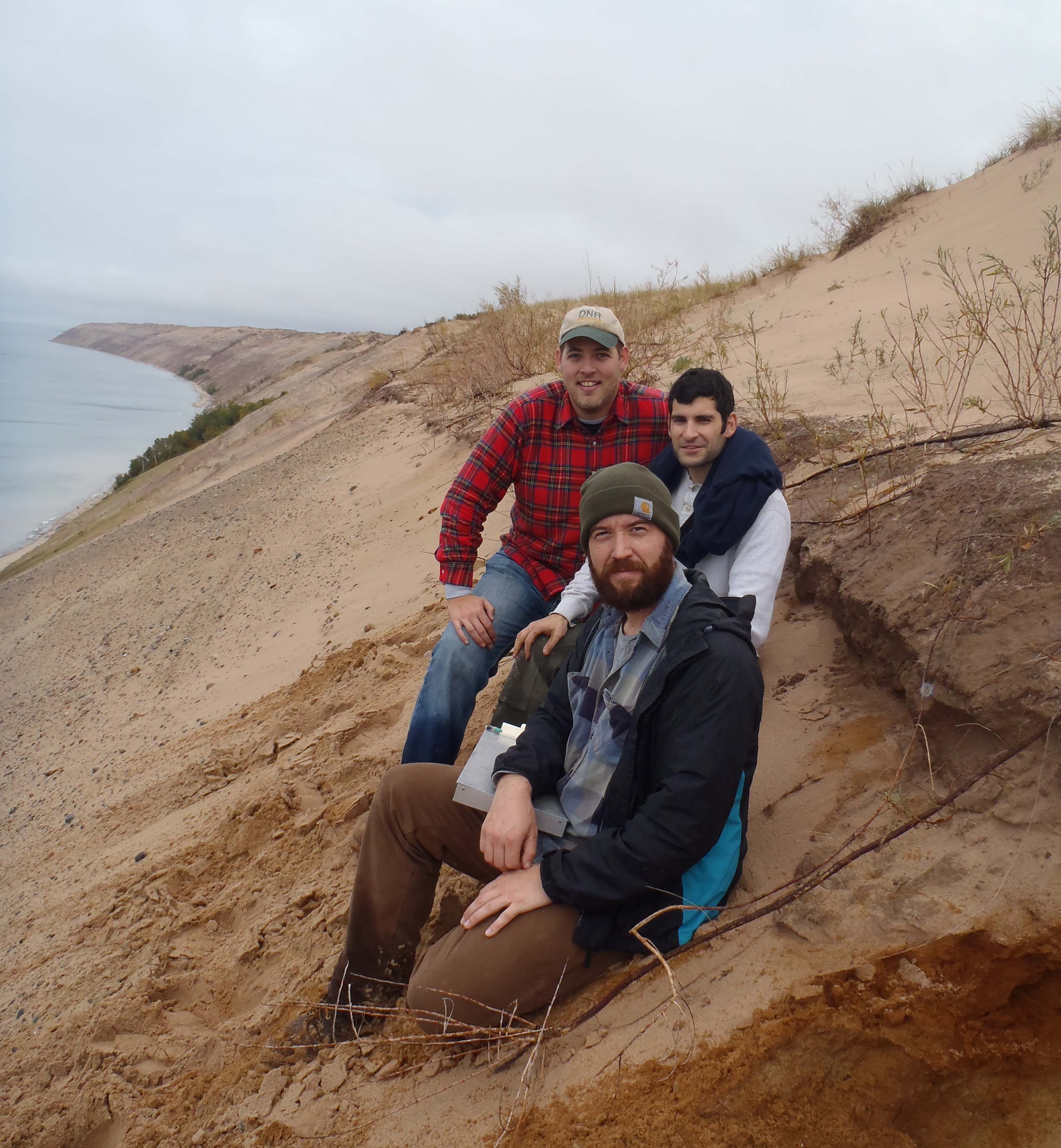
and what you have is a recipe for unhindered, fun and interesting fieldwork.
Have a look at some
of the landscapes we work in.... You might be surprised at what you
see.
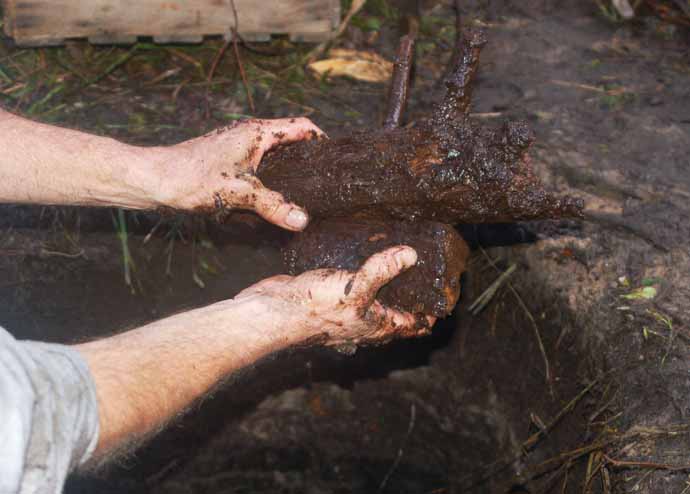
A couple of 10,800-year old spruce logs, buried by outburst flood, northern Lower Michigan.
What we have published
We believe in publication in peer-reviewed, research-based outlets. The
list that can be reached via this
link provides a complete,
current compilation of our published works, including abstracts.
We would be happy to provide reprints at any time; just
email us and ask. We believe strongly in involving students in
our research and publication; many of our papers are co-authored with
students.
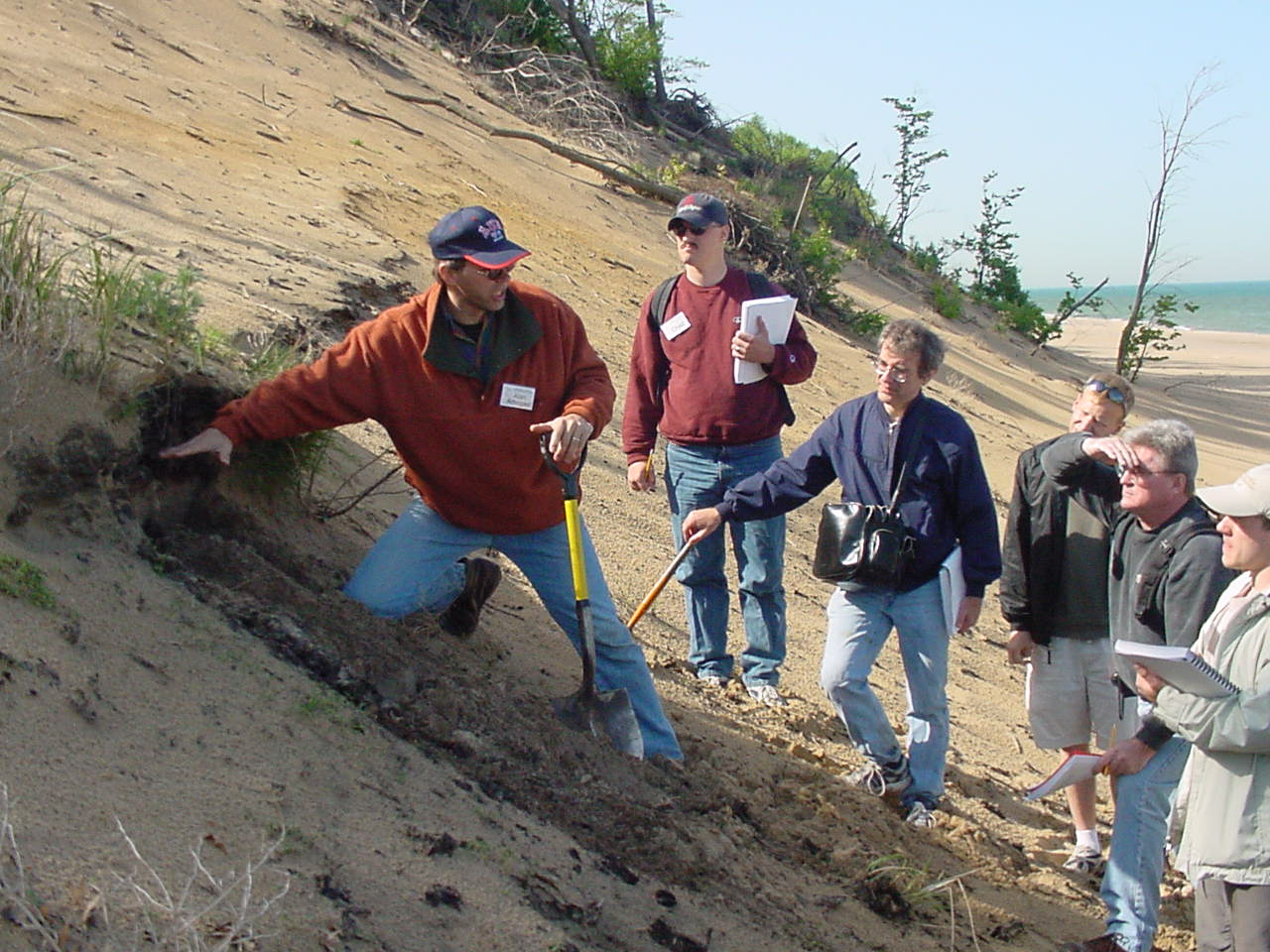
The equipment we have
We have ample field and laboratory equipment to support our research and
that of our students. The list below includes the main pieces
of equipment that we currently have.
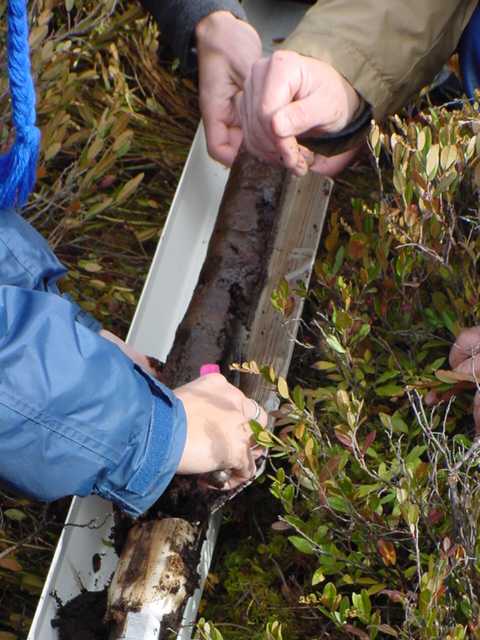
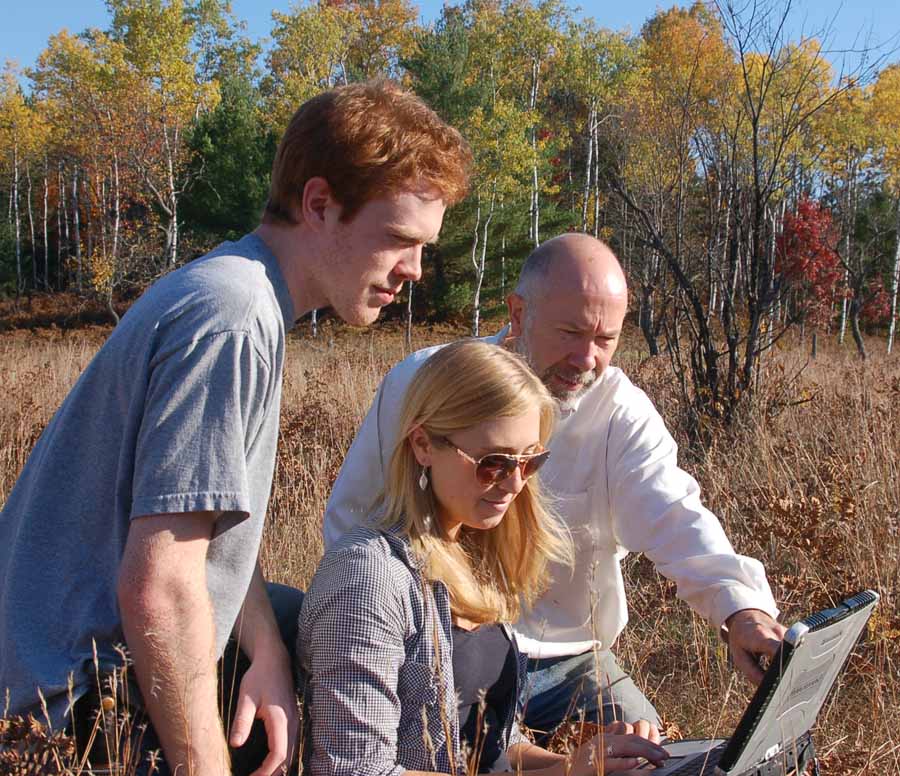
FIELD EQUIPMENT
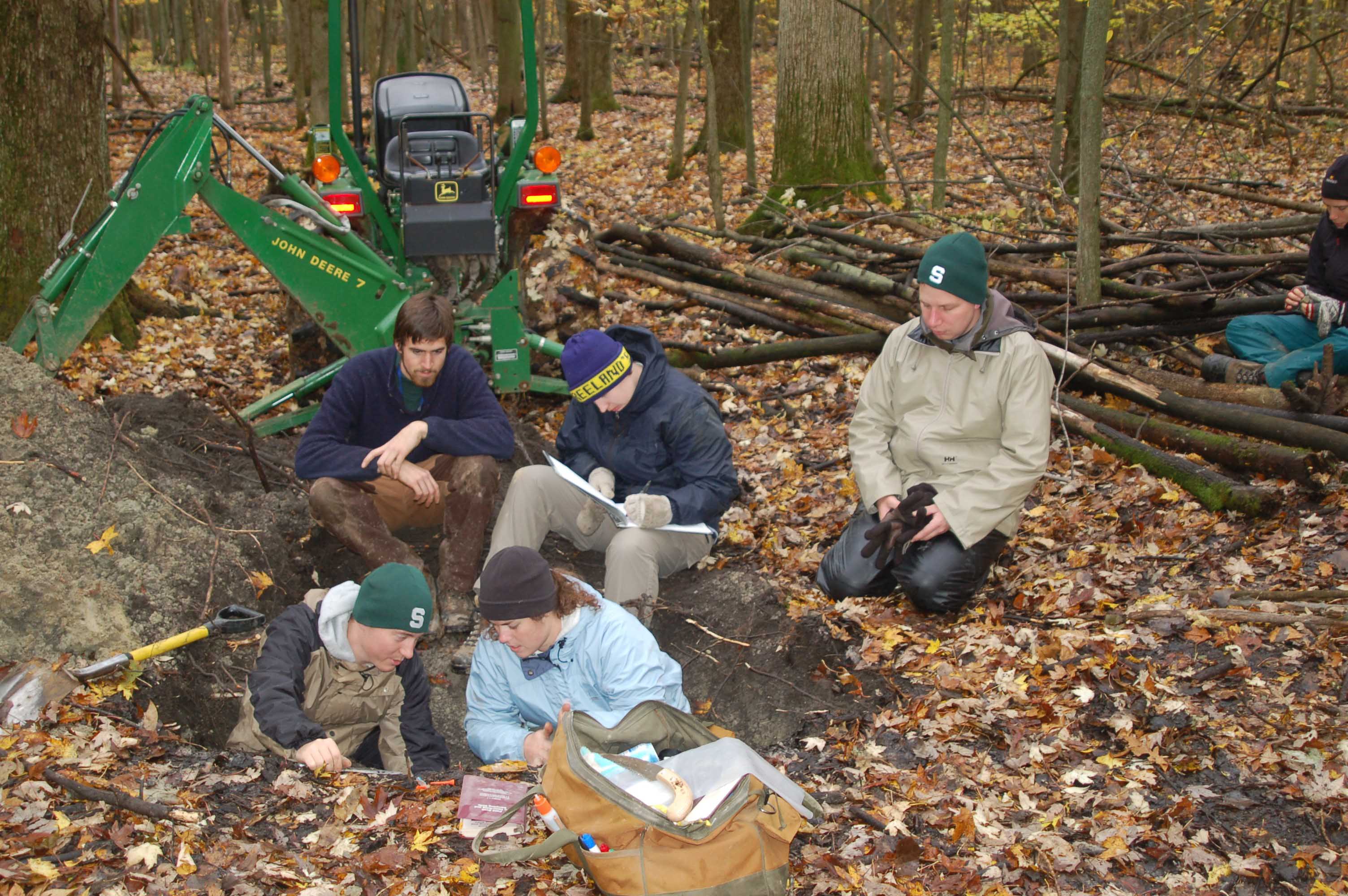
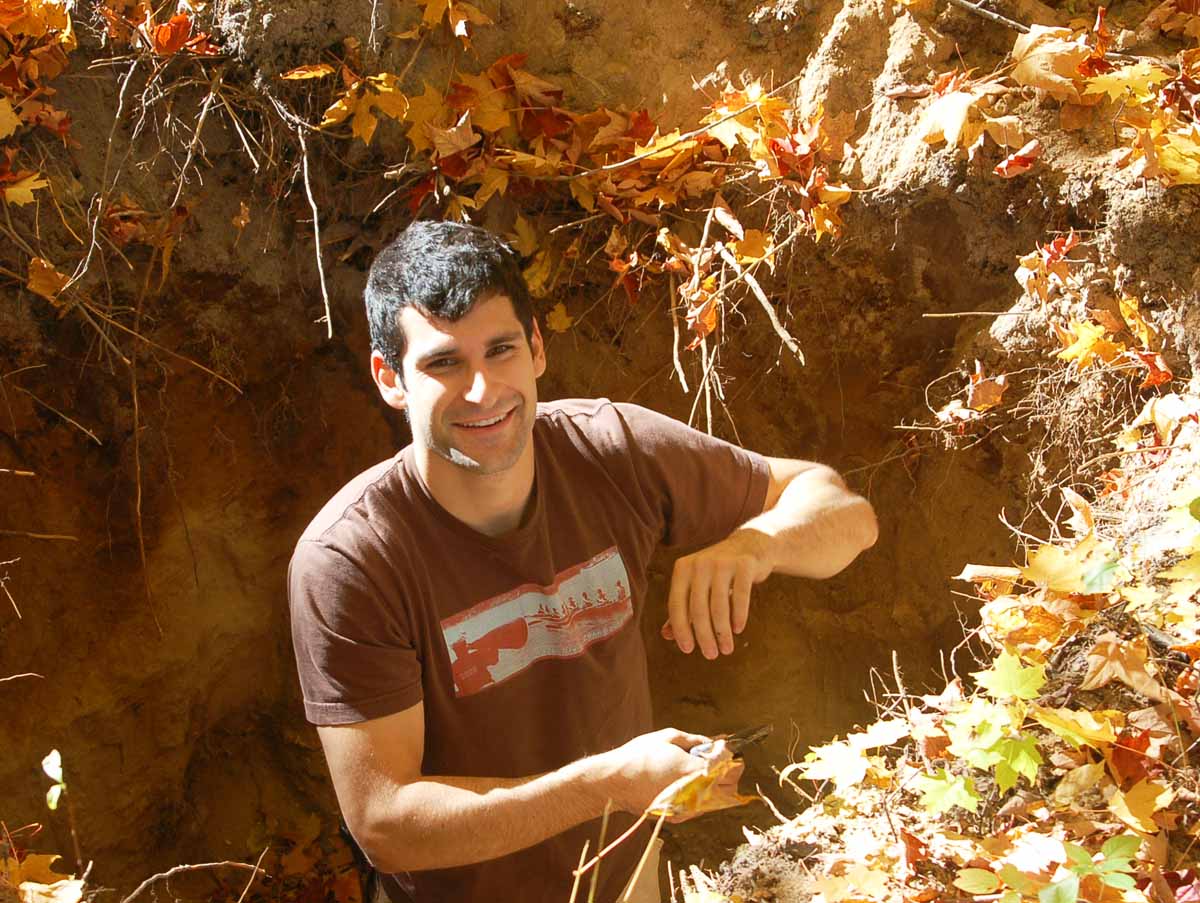
Deep soil pits, dug by machine - easy to work in!
LAB EQUIPMENT
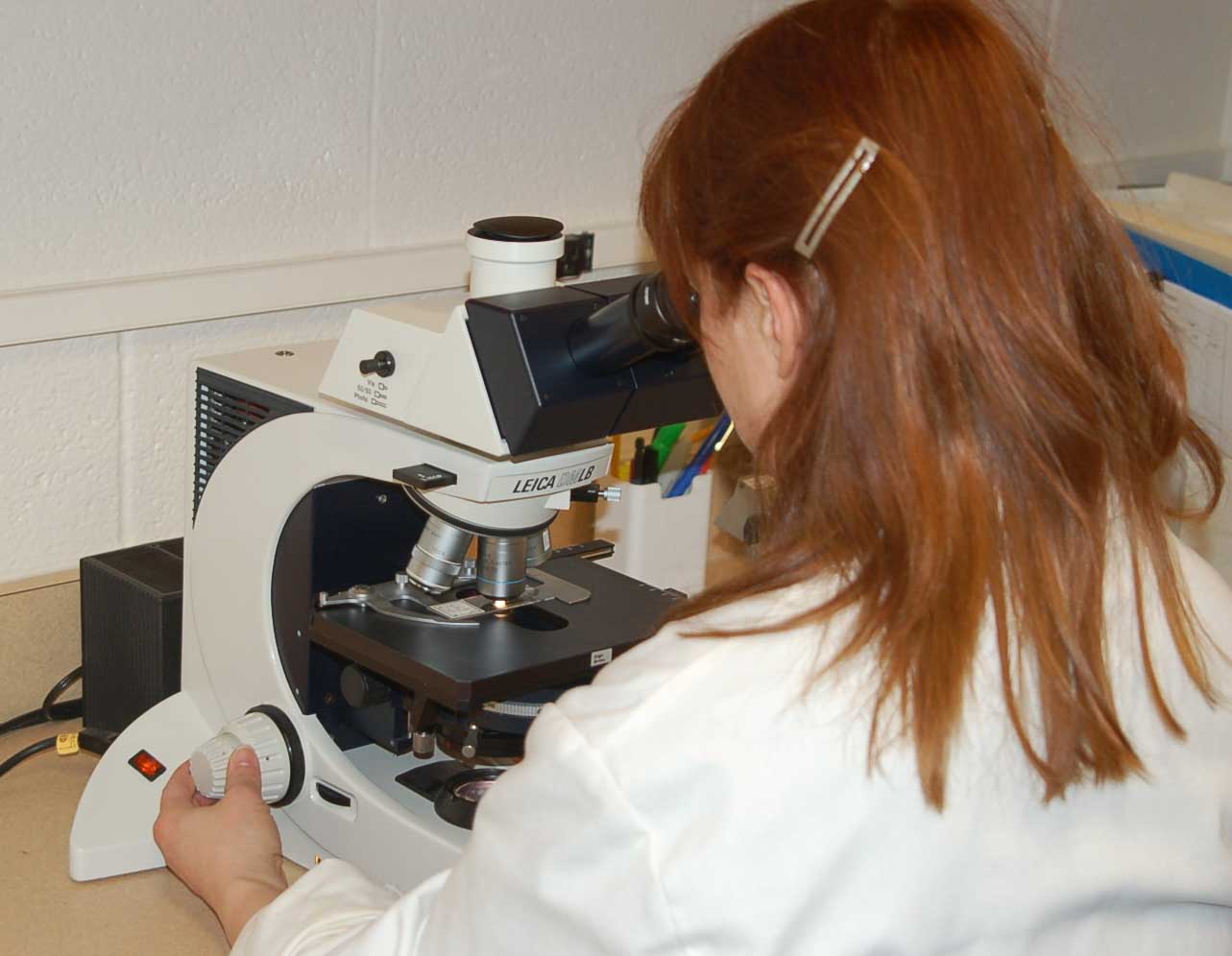
We have two fully functional soils, geomorphology and palynology labs.
Our current labs are equipped to make distilled water and also
contain:
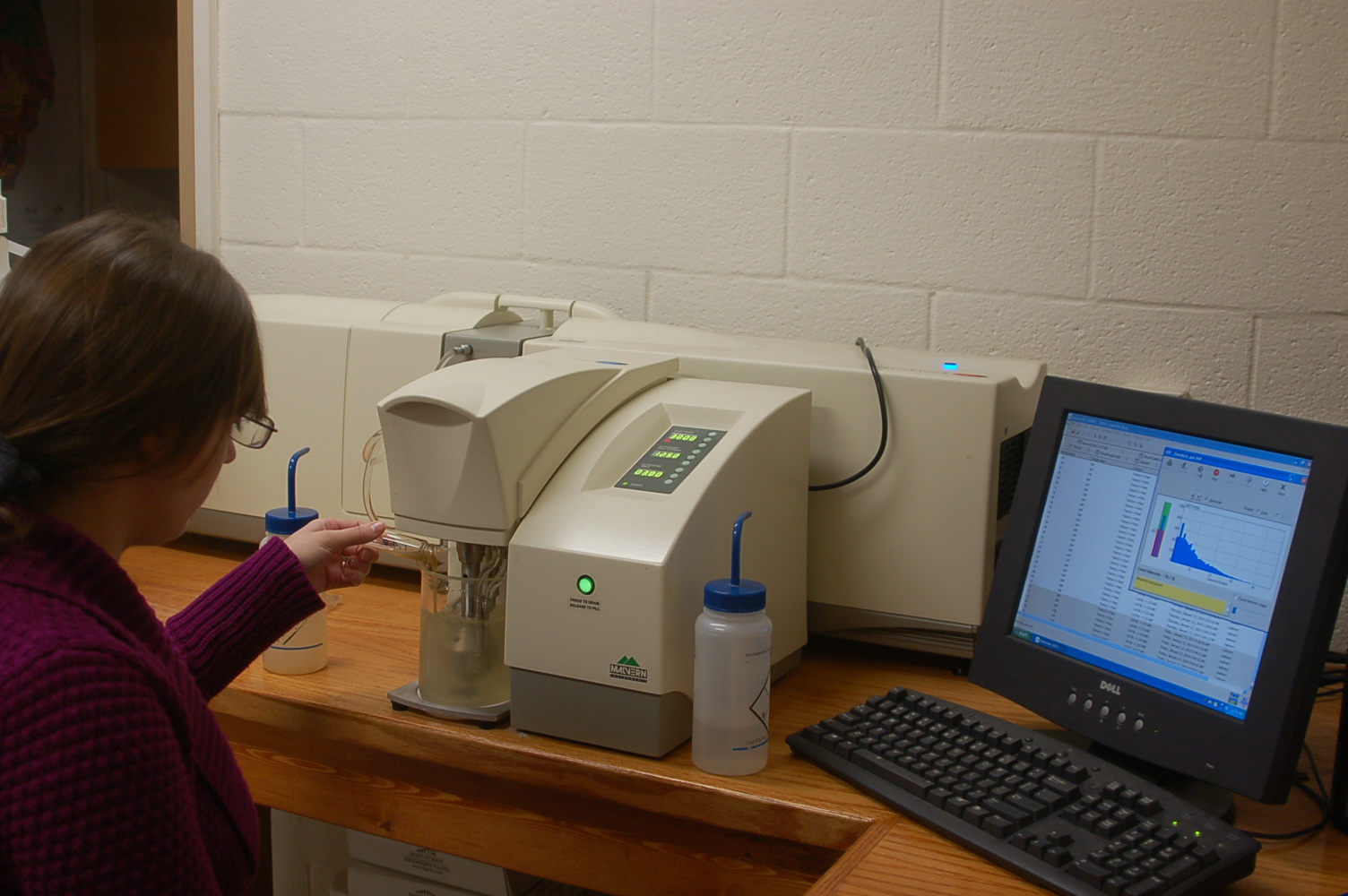
The equipment is shared equally among faculty and students.
The
courses we (and others) teach
We have a long list of courses that are related to
topics in the Quaternary. And we pride ourselves on being effective,
caring educators. For information on courses, please go
here.
The financial support we
have
The Department of Geography is committed to funding its graduate students and their research.
In order to acquire funding, QLRG students must apply to the
graduate programs (MA, MS or PhD) within the Department of Geography.
Funding is awarded competitively, through the Department,
as Teaching and Research Assistants. As a TA, a student can
obtain valuable teaching experience under the close mentoring of a
faculty member. When an RA, the student works closely with their
faculty advisor on a research project. Sometimes these projects
blossom into the student's thesis research, although they need not necessarily
do so. Students in Geography are free to choose whatever research
project they wish, as long as it meets with the approval of their graduate
advisor.
The Department also has several Graduate Office Fellowships (GOFs) available.
GOFs usually range from $500 to $2500, and are awarded in
support of research.
We also have a strong track record, for PhD students, of success in obtaining
support from NSF for dissertation research. Doctoral Dissertation
Improvement awards, funded through NSF, can range
up to $16,000.
What our students have done
Representative student theses, dissertations and research projects over
the past 15 years include:
Michigan state geography Michigan state physical
geography geomorphology geomorphology soils pollen palynology Michigan state
geography Michigan state p
Recent Quidders talks
The QLRG sponsors informal, research-related talks, once or twice a month, in the Department of Geography. We call these presentations "Quidders Talks." for the Quaternary Discussion Group. All persons interested in Quaternary issues may speak, and all are invited. Although our records are incomplete, the listing below is representative of the titles that have been presented in recent years. After each talk we usually adjourn to a local watering hole for continued discussions and comradery. Please join us!
2023 talks
"The Dynamics of Great Lakes Beach-ridge Formation and Implications for Paleo-environmental Assessment of a Migrating Strandplain, SW Lake Michigan" Robin Mattheus (Illinois Geological Survey)
“The Geography and Progression of Blowouts in the Coastal Dunes along the Eastern Shore of Lake Michigan, since 1938” (Alan Arbogast, MSU Geography)
“Dating Erratics in the Great Lakes: Success with 10Be on Isle Royale and Challenges with Schmidt Hammer Dating in Wisconsin” (Eric Portenga, Eastern Michigan University Geography and Geology)
“Glacial Landforms, Sediments, and Deglacial History of Breiðamerkurjökull, Iceland: A Modern Analog for the Lake Michigan Lobe, in Western Lower Michigan” (Pat Colgan, Grand Valley State University)
"Filling the Gaps: Coastal and Benthic Mapping with SfM and Machine Learning" (Phil Wernette, USGS)
"Can disturbance syndromes help better predict forest structure and function?(Adriana Uscanga, MSU Geography)
"Can Great Lakes coastal wetlands reveal evidence of old flood events? A paleotempestological investigation of Magee Marsh, Northwest Ohio" (Thomas Bianchette, Oakland Univ.)
"Marvelous marl: An investigation of limnic Histosols in Michigan" (Barret Wessel, MSU PLant, Soil, and Microbial Sciences)
2022 talks
"Ice-walled lake plain distribution in Michigan" (John Esch, Michigan Geological Survey)
"Banks vs. the United States: A litigation involving lakeshore erosion, science and the courts" (Grahame Larson, MSU Earth and Environmental Sciences)
"Cool, CALM, Collected. History and accomplishments of the Circumpolar Active Layer Monitoring C.A.L.M.) program)" (Vasya Tolmanov, Raven Mitchell, and Fritz Nelson, MSU Geography)
"Post-socialist changes in Romania's physical environment as reflected in land use" (Igor Sirodoev, MSU visiting scholar)
"Quaternary soil evolution on the La Mesa surface (New Mexico) indicates episodic regional scale instability" (Chris Baish, MSU Geography)
"Geoarchaeological evidence from western Michigan for the construction, use, and abandonment of Late Prehistoric storage pits" (Mike Hambcher, State Historic Preservation Office)
"The "latest" on Glacial Lake Roscommon - a vast and complex paleolake in north-central Lower Michigan" (Randy Schaetzl and Chris Baish, MSU Geography)
2021 talks
"Oh no, another learning experience: Tales and Findings from the Theuerkauf Lab's Recent Coastal Geomorphology Studies along the Great Lakes" (Ethan Theuerkauf, MSU Geography)
"How the Mackinac Lobe of the Laurentide Ice Sheet affected Michigan's Landscapes" (Randy Scahetzl, MSU Geography)
"Zwischen Zeit und Ewigkeit: MSU Professor Dieter Brunnschweiler's lost manuscript "The Morphology of Altiplanation in Alaska" (Fritz Nelson, MSU Geography)
"Base Level Fluctuations on the River Raisin and the Huron River 16,800 � 6,000 years ago: Some Fluvial Geomorphic Musings" (Dave Lusch, MSU Geography"
2020 talks
"The geomorphic role of sorted patterned ground in cryoplanation terrace formation" (Raven Mitchell and Fritz Nelson, MSU Geography)
"High-resolution imaging from Earth to Mars" (Raechel Portelli, MSU Geography)
"Early results of mapping the interlobate zone of the Lake Michigan and Saginaw lobes using LiDAR derived DEMs" (Pat Colgan, Grand Valley State)
"Oh no, another learning experience… Tales and Findings from the Theuerkauf Lab's Recent Coastal Geomorphology Studies along the Great Lakes" (Ethan Theuerkauf, MSU Geography)
"How the Mackinac Lobe of the Laurentide Ice Sheet affected Michigan's Landscapes" (Randy Schaetzl, MSU Geography)
"Zwischen Zeit und Ewigkeit: MSU Professor Dieter Brunnschweiler's lost manuscript "The Morphology of Altiplanation in Alaska" (Fritz Nelson, MSU Geography)
"Base Level Fluctuations on the River Raisin and the Huron River 16,800 – 6,000 years ago: Some Fluvial Geomorphic Musings" (Dave Lusch, MSU Geography)
2019 talks
"Glacial landform mapping and chronology of the central Upper Peninsula of Michigan" (Kent Walters, Michigan DEQ)
"Peruvian archaeological sites and paleoenvironmental archives" (Kurt Rademaker, MSU Anthropology)
"A multiscale approach to understanding coastal evolution" (Phil Wernette, Univ. of Windsor)
"Arctic deltas: Toward understanding process and form on high latitude coasts" (Anastasia Piliouras, Los Alamos National Lab)
"Observational and modeling investigations into the drivers of coastal geomorphic change" (Ethan Theuerkauf, Illinois Geological and Natural History Survey)
"An holistic approach to coastal studies" (Mayra Roman-Rivera, Univ. of South Carolina)
"Variation in Soil Properties and Topographic Roughness of Stabilized Sand Dunes in the Central Great Plains, USA: Implications for Susceptibility to Reactivation" (Kevin McKeehan, MSU Geography)
"Importance and Implications of Freshwater Ice, from the Straits of Mackinac to the Arctic" (Grant Gunn, Geography)
"Block Diagrams and the Hand of William Morris Davis" (Mark Hineline, MSU Lyman Briggs College)
"Swept bare: the geomorphology and stratigraphy of the Iowan Erosian Surface". (Phill Kerr, Iowa Geological Survey)
"High-order drainage response to Euroamerican landscape transformation". (Art Bettis, University of Iowa)
"Dominance of Strong Northwest Winds Across the Midwest in the Postglacial Period" (Randy Schaetzl, Geography)
"Repeat Photography of Lake Michigan Coastal Dunes: Expansion of Vegetation and Human Impacts Since 1900". (Kevin McKeehan and Alan Arbogast, Geography)
2018 talks
"The Paleobotanical record of Silver Lake, Cheboygan County offers new insights into postglacial plant colonization in northern Lower Michigan" (Catherine Yansa, Geography)
"Holocene-aged loess in the lee of sand dunes in Michigan's Upper Peninsula" (Chase Kasmerchak and Kelsey Nyland, Geography)
"Comprehensive mapping of Michigan's coastal dunes" (Alan Arbogast, Geography)
2017 talks
"Late Pleistocene winds in the Great Lakes Region: It's not just about dunes anymore" (Randy Schaetzl, Geography)
"The Circumpolar Active Layer Monitoring (CALM) Program" (Fritz Nelson and Kelsey Nyland, Geography)
"There's LiDAR in them thar hills! Quaternary Geologic Mapping of the Lake Border Moraine in Wexford County, Michigan" (Kevin Kincare, USGS)
"Paleoclimatic and Anthropogenic Influences on Late Holocene Temperate Forest Ecosystems: A Paleoecological Perspective" (Albert Fulton, Geography)
"LiDAR for Environmental, Natural Resources, Hydrological, Engineering, and Geological Applications" (John Esch, Michigan Geological Survey Office)
2016 talks
"A Characteristic Periglacial Landscape: Cryoplanation Terraces of Upland Beringia, Alaska" (Fritz Nelson and Kelsey Nyland, Geography)
"Erosion Rates of Apline Glaciers" (Grahame Larson, Geosciences)
"Loess Deposits on the Buckley Flats, Northwestern Lower Michigan" (Randy Schaetzl, Geography)
"Kame deltas provide evidence for a previously unknown, high-level glacial lake, and constrain the glacial retreat from Lower Michigan, USA" (Austin Fillmore, Jordan Lee, Bethany Dickerson, and Randy Schaetzl, Geography)
"The river that flows uphill: Late Cenozoic evolution of the lower Wisconsin River valley, stream piracy, and Quaternary reorganization of North American mid-continent drainage systems" (Eric Carson,
Wisconsin Geological and Natural History Survey)
2015 talks
"Loess in southwestern Michigan: Remnants of a glacial legacy" (Sam Smidt, Geosciences)
"Periglacial Appalachia: Paleoclimatic and geocryological implications of blockfield elevation gradients, eastern USA" (Fritz Nelson, Geography)
"Mid-Holocene terrace construction within the Upper Ohio Valley" (Bill Monaghan, Indiana
Univeristy)
"Thinking out loud about the glaciation of central Lower Michigan" (Randy
Schaetzl, Geography)
"Why is northwest Michigan the land of long lakes?" (Dave Lusch, Geography)
"Two paleovegetation records from the western shore of Lake Michigan" (Catherine Yansa, Geography)
"The Construction of a Classic: Leverett and Taylor's Rocky Road to the Publication of Monograph 53" (Diane Backlawski, Geosciences)
2014 talks
"Deglaciation and post-glacial fluvial geomorphology of Northwestern Pennsylvania" (Todd Grote, Eastern Michigan University)
"Collaborative research interests in Michigan archaeology, geography, and geology" (Bill Lovis, Anthropology)
"Historic channel changes in Lower Michigan" (Michael Michalek, Geography)
"Repeat Photography of Lake Michigan Coastal Dunes: What Does It Mean?" (Alan Arbogast, Geography)
"A century of glacier change
in the Wind River Range, WY" (Mark DeVisser, Geography)
2013 talks
"OSL Ages on Loess Constrain the Advance of the Chippewa Lobe in Western Wisconsin, USA" (Randy Schaetzl, Geography)
"Sand dune development and reactivation in the Tanana River Lowlands, central Alaska" (Bill Johnson, Kansas University)
"Quaternary Geology of Metropolitan Detroit, Michigan" (Jeffrey Howard, Wayne State University)
"Glacial Lake Agassiz: A reassessment of its role as the smoking gun for triggering abrupt climate changes at the close of the last ice age" (Tim Fisher, Univ of Toledo)
"Dunes and Lake Algonquin spit indicate strong NE winds during Late Pleistocene in Michigan's central Upper Peninsula" (Jay Strahan, Geography)
"Driving vs. resisting forces in Anthropocene politics" (Whitney Autin, State University of New York, Brockport)
"Quaternary geology of metropolitan Detroit, Michigan" (Jeffrey Howard, Wayne State University)
"Wait... wait, Don't tell me!... Evolving paradigms of sand dune origin in Michigan" (Walt Loope, US Geological Survey)
2012 talks
"Aspects of the Pleistocene Vegetation of southern Ontario: Insights from the Zorra Quarry and Innerkip sites" (Catherine Yansa, Geography)
"Variability in Shoreline Position at four sites in Lower Michigan" (Phil Wernette, Geography)
"The Black River delta: A Glacial Lake Algonquin Feature in northern Lower Michigan" (Randy Schaetzl's Freshman Honors Seminar class)
"Evidence for high level proglacial lakes of the Port Huron and Lake Border moraines in northwestern Lower Michigan" (Kevin Kincare, USGS)
"Landform Characterization Using Geophysics - Recent Advances, Applications, and Emerging Tools" (Remke van Dam, Geological Sciences)
2011 talks
"Morainic features and ancient shorelines in Michigan's eastern UP: A Fall 2011 field report" (Bill Blewett and Scott Drzyzga, Geography, Shippensburg University)
"The rivers of no reprieve: a tectonic and climatic tale from the heart of Siberia" (Ben Johnson, Geological Sciences)
"Analyzing digital water well logs to characterize the lithofacies of selected morphostratigraphic units in southern Lower Michigan – a first attempt" (David Lusch, Geography)
"Thin loess in the western Upper Peninsula of Michigan" (Michael Luehmann, Geography)
"Pleistocene-age Giant Beaver (Castoroides ohioensis) and Extant Beaver (Castor canadensis) environments of southern Wisconsin" (Catherine Yansa, Geography)
"Dead zone in the Gulf of Mexico: Nitrate yield from the Upper Mississippi and Ohio River basins" (Brad Miller, Geography)
"Exploring the potential linkage of coastal sand dune activation and drought episodes in the northern Lake Michigan basin" (Alan Arbogast, Geography)
2010 talks
"Using GIS data to develop a better physiographic map: The Michigan example" (Randy Schaetzl, Geography)
"Supercool glaciers and landscape development in the Great Lakes" (Grahame Larson, Geological Sciences)
"An eolian mantle on the Dowagiac Delta, Berrien County, Michigan" (Alex Shackleton, Geography)
2009 talks
"The research of natural forest dynamics in the Czech Republic: Research activities of the Department of Forest Ecology, VUKOZ" (Pavel Samonil, Forestry, Czech Republic)
"The Iron County loess deposits: Loess is more" (Mike Bigsby, Geography)
"A full glacial paleoenvironmental record from western Tennessee: Aspects of a multi-proxy study" (Catherine Yansa, Geography)
2008 talks
"Paleolakes, spits and loess- what can they tell us about paleowinds?" (Randy Schaetzl, Geography)
"Silty sediments in kettle bottoms of the Lake Michigan/Saginaw interlobate" (Trevor Hobbs, Geography)
igan state physical geography geomorphology geomorphology soils pollen palynology Michigan state geography Michigan state physical geography geomorphology geomorphology soils pollen palynology Michigan state geography Michigan state physical geography geomorphology geomorphology soils pollen palynology Michigan state geography Michigan state physical geography geomorphology geomorphology soils pollen palynology Michigan state geography Michigan state physical geography geomorphology geomorphology soils pollen palynology Michigan state geography Michigan state physical geography geomorphology geomorphology soils pollen palynology Michigan state geography Michigan state physical geography geomorphology geomorphology soils pollen palynology Michigan state geography Michigan state physical geography geomorphology geomorphology soils pollen palynology Michigan state geography Michigan state physical geography geomorphology geomorphology soils pollen palynology Michigan state geography Michigan state physical geography geomorphology geomorphology soils pollen palynology Michigan state geography Michigan state physical geography geomorphology geomorphology soils pollen palynology Michigan state geography Michigan state physical geography geomorphology geomorphology soils pollen palynology Michigan state geography Michigan state physical geography geomorphology geomorphology soils pollen palynology Michigan state geography Michigan state physical geography geomorphology geomorphology soils pollen palynology quaternary studies quaternary studies quaternary studies quaternary studies quaternary studies quaternary studies quaternary studies quaternary studies quaternary studies quaternary studies quaternary studies quaternary studies quaternary studies quaternary studies quaternary studies quaternary studies